André Malraux

Writing

Born: 1901-11-03
Died: 1976-11-23
From: Paris, France
Gender: Male
Popularity: 0.2

Also Known As

Georges André Malraux

Biography

Georges André Malraux (3 November 1901 – 23 November 1976) was a French novelist, art theorist, and minister of cultural affairs. Malraux's novel La Condition Humaine (Man's Fate) (1933) won the Prix Goncourt. He was appointed by President Charles de Gaulle as information minister (1945–46) and subsequently as France's first cultural affairs minister during de Gaulle's presidency (1959–1969). Malraux was born in Paris in 1901, the son of Fernand-Georges Malraux (1875–1930) and Berthe Félicie Lamy (1877–1932). His parents separated in 1905 and eventually divorced. There are suggestions that Malraux's paternal grandfather committed suicide in 1909. Malraux was raised by his mother, maternal aunt Marie Lamy and maternal grandmother, Adrienne Lamy (née Romagna), who had a grocery store in the small town of Bondy. His father, a stockbroker, committed suicide in 1930 after the international crash of the stock market and onset of the Great Depression. From his childhood, associates noticed that André had marked nervousness and motor and vocal tics. The recent biographer Olivier Todd, who published a book on Malraux in 2005, suggests that he had Tourette syndrome, although that has not been confirmed. Either way, most critics have not seen this as a significant factor in Malraux's life or literary works. The young Malraux left formal education early, but he followed his curiosity through the booksellers and museums in Paris, and explored its rich libraries as well. Malraux's first published work, an article entitled "The Origins of Cubist Poetry", appeared in Florent Fels' magazine Action in 1920. This was followed in 1921 by three semi-surrealist tales, one of which, "Paper Moons", was illustrated by Fernand Léger. Malraux also frequented the Parisian artistic and literary milieux of the period, meeting figures such as Demetrios Galanis, Max Jacob, François Mauriac, Guy de Pourtalès, André Salmon, Jean Cocteau, Raymond Radiguet, Florent Fels, Pascal Pia, Marcel Arland, Edmond Jaloux, and Pierre Mac Orlan. In 1922, Malraux married Clara Goldschmidt. Malraux and his first wife separated in 1938 but didn't divorce until 1947. His daughter from this marriage, Florence (b. 1933), married the filmmaker Alain Resnais. By the age of twenty, Malraux was reading the work of the German philosopher Friedrich Nietzsche who was to remain a major influence on him for the rest of his life. Malraux was especially impressed with Nietzsche's theory of a world in continuous turmoil and his statement "that the individual himself is still the most recent creation" who was completely responsible for all of his actions. Most of all, Malraux embraced Nietzsche's theory of the Übermensch, the heroic, exalted man who would create great works of art and whose will would allow him to triumph over anything. ... Source: Article "André Malraux" from Wikipedia in English, licensed under CC-BY-SA 3.0.

Awards & Nominations29 won · 16 nominated

🏆 Won

Alfonso Reyes International Prize

1976
🏆 Won

Jawaharlal Nehru Award for International Understanding

1972
Nominated

Nobel Prize in Literature

1965
Nominated

Nobel Prize in Literature

1964
Nominated

Nobel Prize in Literature

1963
Nominated

Nobel Prize in Literature

1962
Nominated

Nobel Prize in Literature

1961
Nominated

Nobel Prize in Literature

1960
Nominated

Nobel Prize in Literature

1959
Nominated

Nobel Prize in Literature

1958
Nominated

Nobel Prize in Literature

1957
Nominated

Nobel Prize in Literature

1956
Nominated

Nobel Prize in Literature

1955
Nominated

Nobel Prize in Literature

1954
Nominated

Nobel Prize in Literature

1952
🏆 Won

Grand Prize for the Best Novels of the Half-Century

Man's Fate

1950
Nominated

Nobel Prize in Literature

1949
Nominated

Nobel Prize in Literature

1948
Nominated

Nobel Prize in Literature

1947
🏆 Won

Louis Delluc Prize

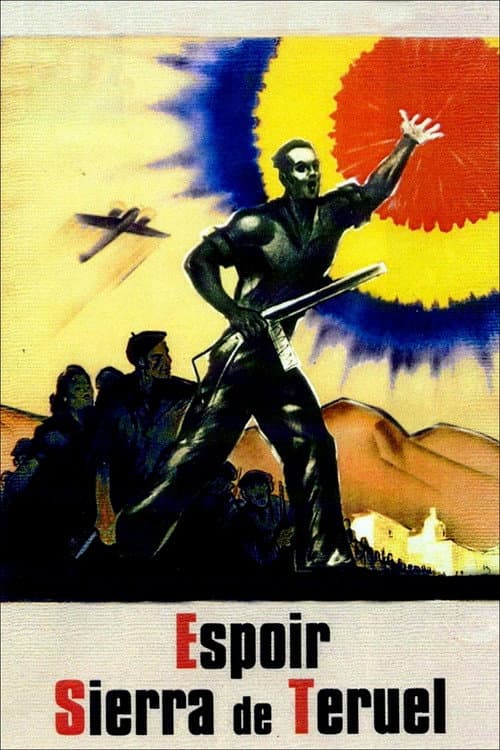
L'espoir

1945
🏆 Won

Prix Goncourt

Man's Fate

1933
🏆 Won

Prix Interallié

The Royal Way

1930
🏆 Won

Knight First Class of the Order of the Lion of Finland

🏆 Won

Grand Cross of the Order of the Lion of Finland

🏆 Won

Croix de guerre 1939–1945

🏆 Won

Knight Grand Cross of the Order of St. Olav

🏆 Won

Grand Cross of the Military Order of Saint James of the Sword

🏆 Won

Grand Officer of the Order of the Southern Cross

🏆 Won

Order of the Equatorial Star

🏆 Won

Grand Cross of the Order of Wissam Alaouite

🏆 Won

Grand Cross of the Order of George I

🏆 Won

Order of the Republic

🏆 Won

Grand Cross of the Order of the Crown

🏆 Won

Grand Cordon of the National Order of the Cedar

🏆 Won

Companion of the Liberation

🏆 Won

Order of the Dannebrog

🏆 Won

Distinguished Service Order

🏆 Won

Great Cross with Star and Sash of the Order of Merit of the Federal Republic of Germany

🏆 Won

Grand Cross of the Order of the Dannebrog

🏆 Won

Grand Officer of the Order of Merit of the Italian Republic

🏆 Won

Officer of the Legion of Honour

🏆 Won

Commanders Grand Cross of the Order of the Polar Star

🏆 Won

Order of the Rising Sun, 1st class

🏆 Won

Order of the Lion of Finland

🏆 Won

Grand Cross of the Order of the Oak Crown